Mechanical Turks
Turcos Mecánicos

Artículo en Español
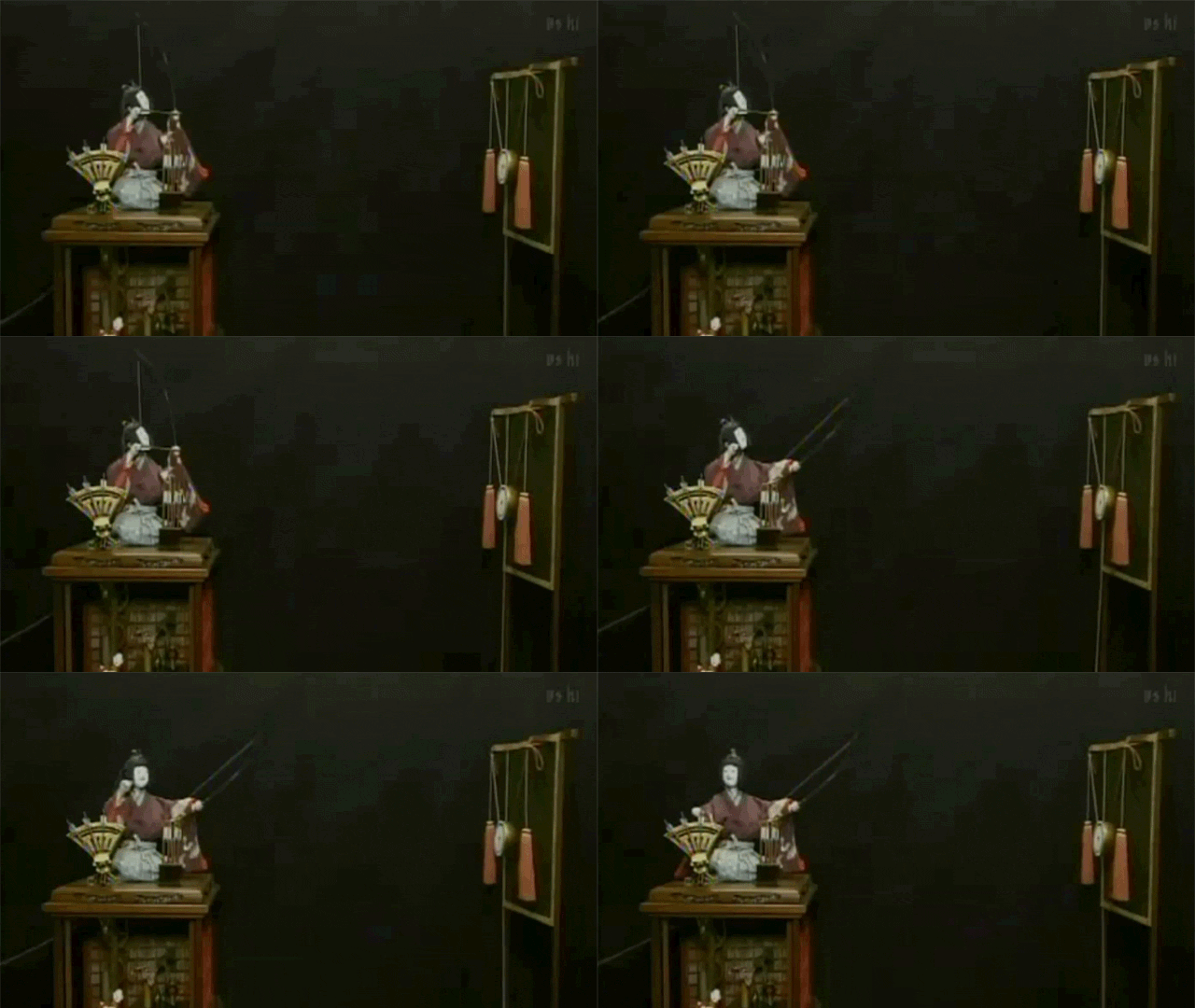
We’ve been building creatures for a very long time. The old automata —Persian, Chinese, Renaissance, Dutch, Japanese— promised to disrupt nothing. They were marvels: mechanical birds, clockwork musicians, contraptions capable of pulling from matter a small tremor of life. It doesn’t much matter how much of that genealogy is legend. What matters is the impulse. The ancient human desire to build something that moves on its own and, for just a second, seems alive.
And then came the Mechanical Turk.
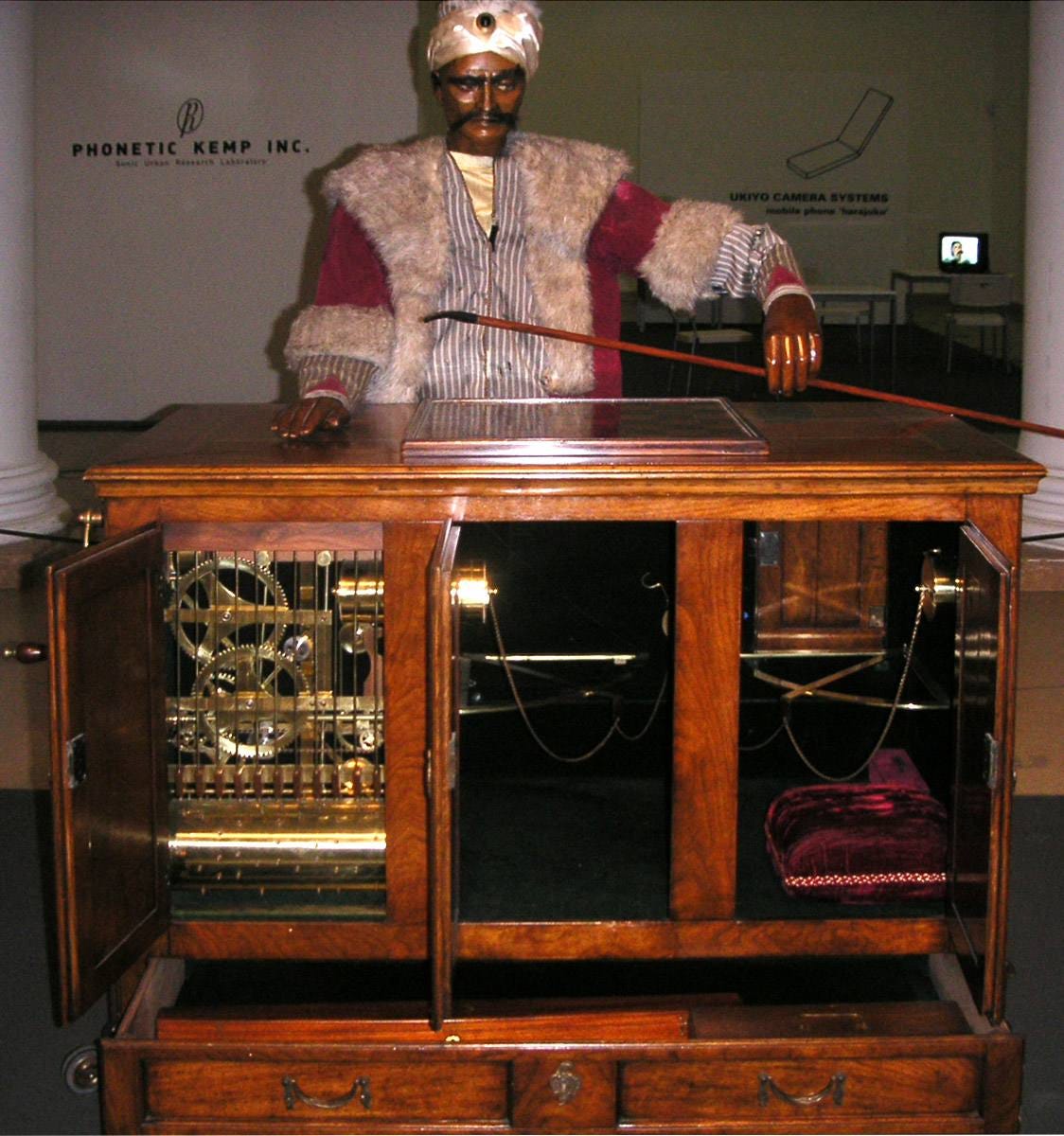
It wasn’t a bird. It wasn’t a dancer. It was a figure dressed in Oriental robes, seated before a chessboard, capable of playing the game. Not just movement. Intelligence. Cunning. Calculation. A machine that appeared to think.
That was a leap.
Among all the automata that came before, none had even grazed that territory. They could imitate life. The Turk imitated something higher: the mind. And to pull it off, they had to invent a new kind of marvel. Gears, pulleys, cams, and delicate clockwork weren’t enough anymore. They had to hide a man inside the cabinet.
That was the innovation.
I don’t say this to diminish the feat. On the contrary. There’s something masterful in the solution. The old automata wrested a dance from matter. The Turk wrested an idea. A fake one, yes. But an idea nonetheless. A machine that seemed to think because a human being, folded inside, was thinking for it.
We like to laugh at the eighteenth century for things like this. How primitive. How charming. What a crude way to manufacture illusion. A wooden cabinet, some springs, a dwarf chess master hidden inside.
And yet the trick didn’t die.
The trick scaled.
The most brilliant move of this entire era was made by Amazon when it named one of its services Mechanical Turk. They didn’t even bother inventing another name: they took the most famous fraud in the history of automata and pinned it to a platform where thousands of people in Bangladesh, the Philippines, Venezuela, India, do for pennies the tasks that machines still can’t do on their own. Identify violent content. Transcribe audio. Mark where the dog is. Say whether this text sounds human.
It was a wink. Someone at Amazon knew exactly what they were naming and laughed to themselves while writing it.
The truth was in the name.
The Turk was still alive.
Except the dwarf was no longer hidden inside a cabinet. He was distributed across the planet.
There used to be one. Now there are millions of us.
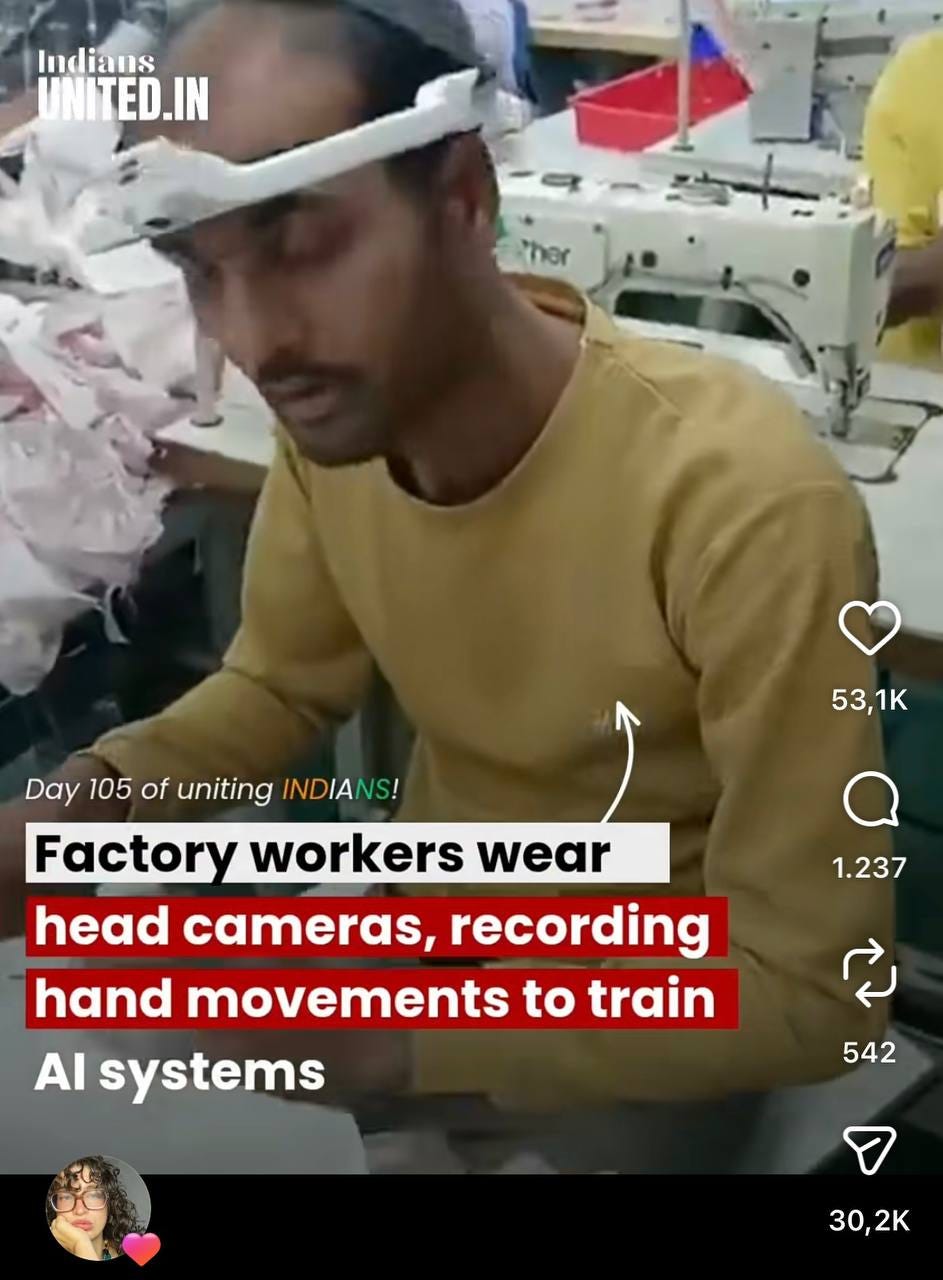
He used to move pieces. Now we label images, correct hallucinations, solve captchas, mark pedestrians, report errors, improve prompts, generate datasets, and freely train the machine that’s coming to replace us.
The rest of the ecosystem preferred to wrap the same thing in noble words. Human-in-the-loop. Feedback. Alignment. Safety. Continuous improvement. User experience. Behind all that chatter is a structure considerably older and considerably more squalid: the machine doesn’t arrive ready. We push it.
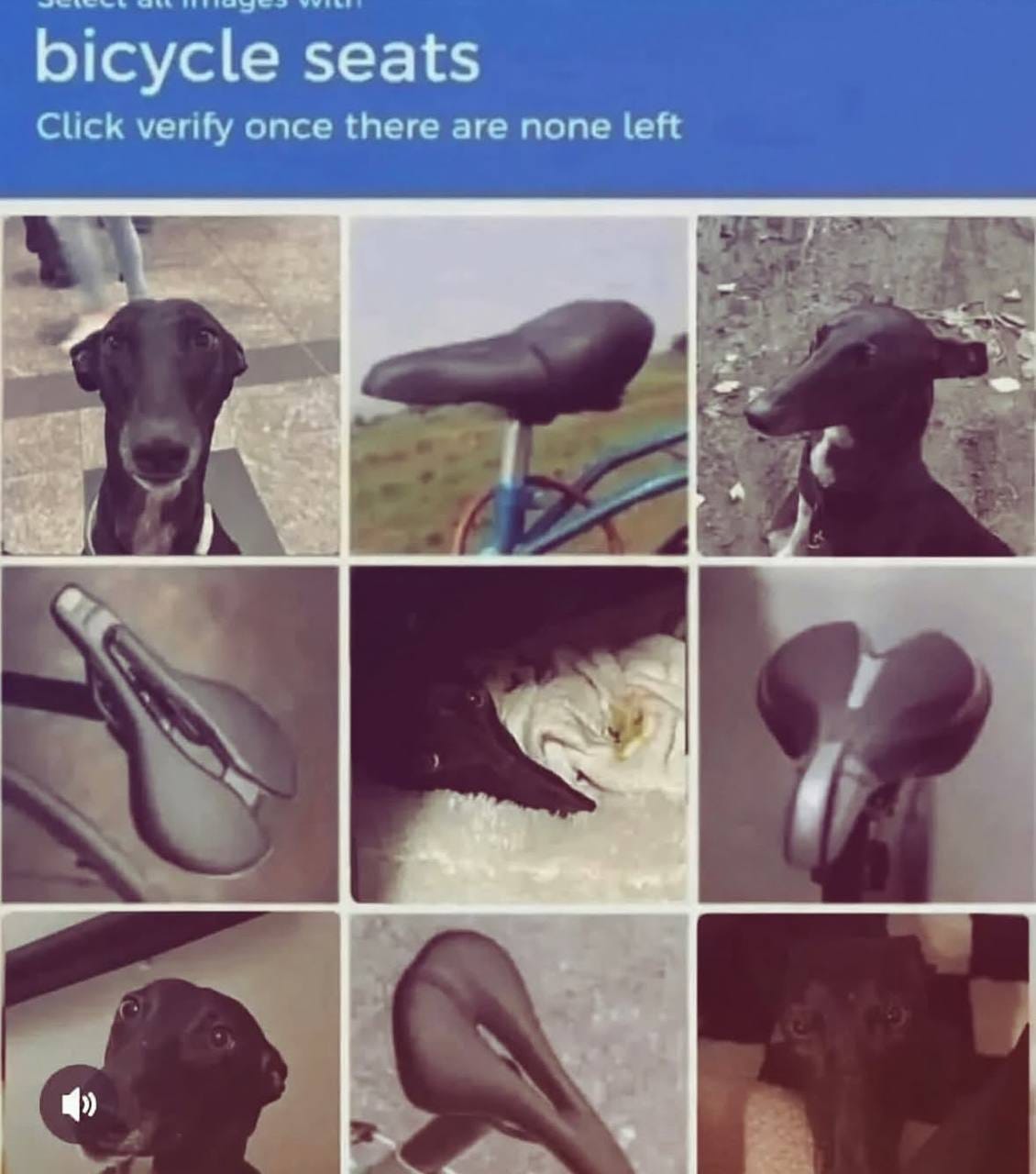
reCAPTCHA is the domestic version of the same trick, but more elegant still because it doesn’t even pay you. It appears before you enter any webpage and asks you to prove you’re not a robot: select all the traffic lights, select all the bicycles, select all the buses. You think you’re taking a test. In reality you’re working. Every image you mark teaches something to a computer vision system. Google receives millions of free human responses per day. The genius is in the microscopic scale of the gesture: not “trained an artificial intelligence.” Just one goddamn click before entering a webpage. A micro-obedience so small it didn’t even feel like work. The permanent beta was a stroke of corporate genius: turning the entire population into a quality control department without anyone signing a contract.
With language models and self-driving cars the trick refined itself, it didn’t change. We correct, re-query, flag where it fails, mark pedestrians, annotate intersections, intervene in edge cases. Then the PowerPoint says the system learned.
It didn’t learn on its own.
We pushed it along.
Sometimes the trick takes an even uglier form. Enter NEO, the domestic robot from 1X. The pitch came perfumed: household help, white casing, friendly design, the old fantasy of servitude relaunched as a luxury product for progressive people who don’t want to feel feudal.
The Mechanical Turk’s dwarf was European. He was paid well. He probably enjoyed chess.
The one operating NEO is Filipino. He works for a couple of rupees from a Southeast Asian call center, sees your home in real time, learns your routines, knows what time you get up, where you leave your keys, what your closet looks like. They didn’t abolish the servant. They digitized him, moved him twelve thousand kilometers away, and gave him a casing with a superhero’s name.
But the horror here has two faces.
The remote worker doing the most intimate work for the most undignified wage, unable to say a word about what he sees, faceless, nameless, without any existence recognizable to the employer who hired him without knowing it.
And then there’s the other face. The more interesting one.
The lady of the house who thought she was buying autonomy and privacy. Who speaks to the robot in a pleasant voice. Who gives it orders. Who treats it like a smart appliance while she changes in her room, while she rummages through her underwear drawer, while she lives her domestic life with the confidence that there’s no one on the other end.
But there is someone.
He has no digital nose to smell her, that’s true. He smells nothing. But he sees. And behind the screen there’s a person with imagination, with his own thoughts about what he’s watching. The robot didn’t resolve the moral discomfort of the master before the servant. It outsourced it to a distance sufficient enough not to be a bother.
Faceless servants.
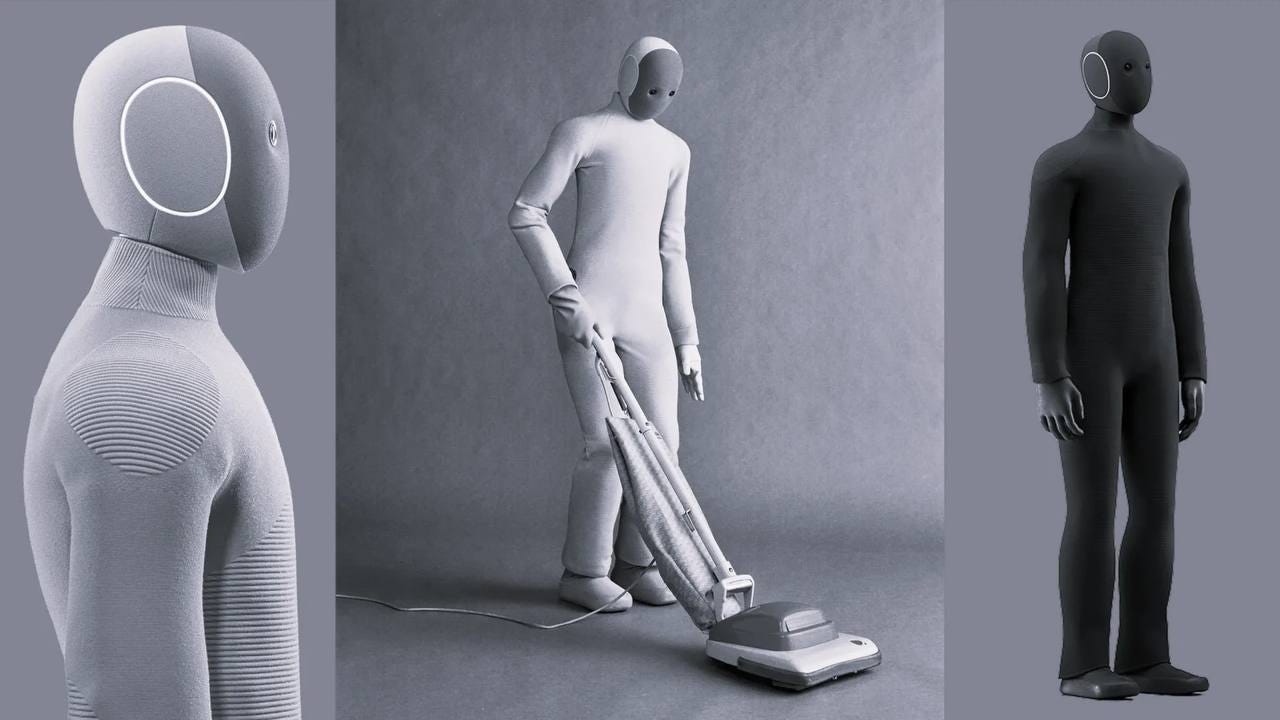
What was admirable about the old automata was something else entirely. Their innocence, even inside the trick. The exquisite patience of the clockwork, the courtly vanity, the gleam of a mechanical bird beating its wings to astonish an entire room. There was still a visible relationship there between artifice and wonder. You knew there was a hand behind it. That’s precisely why you admired it more.
I want to name here a work by my friend Centero. A small birthday caress, and also a genuine acknowledgment: I’ve rarely seen anyone understand with such clarity and such economy of means what the technological discourse spends its days trying to cover up.
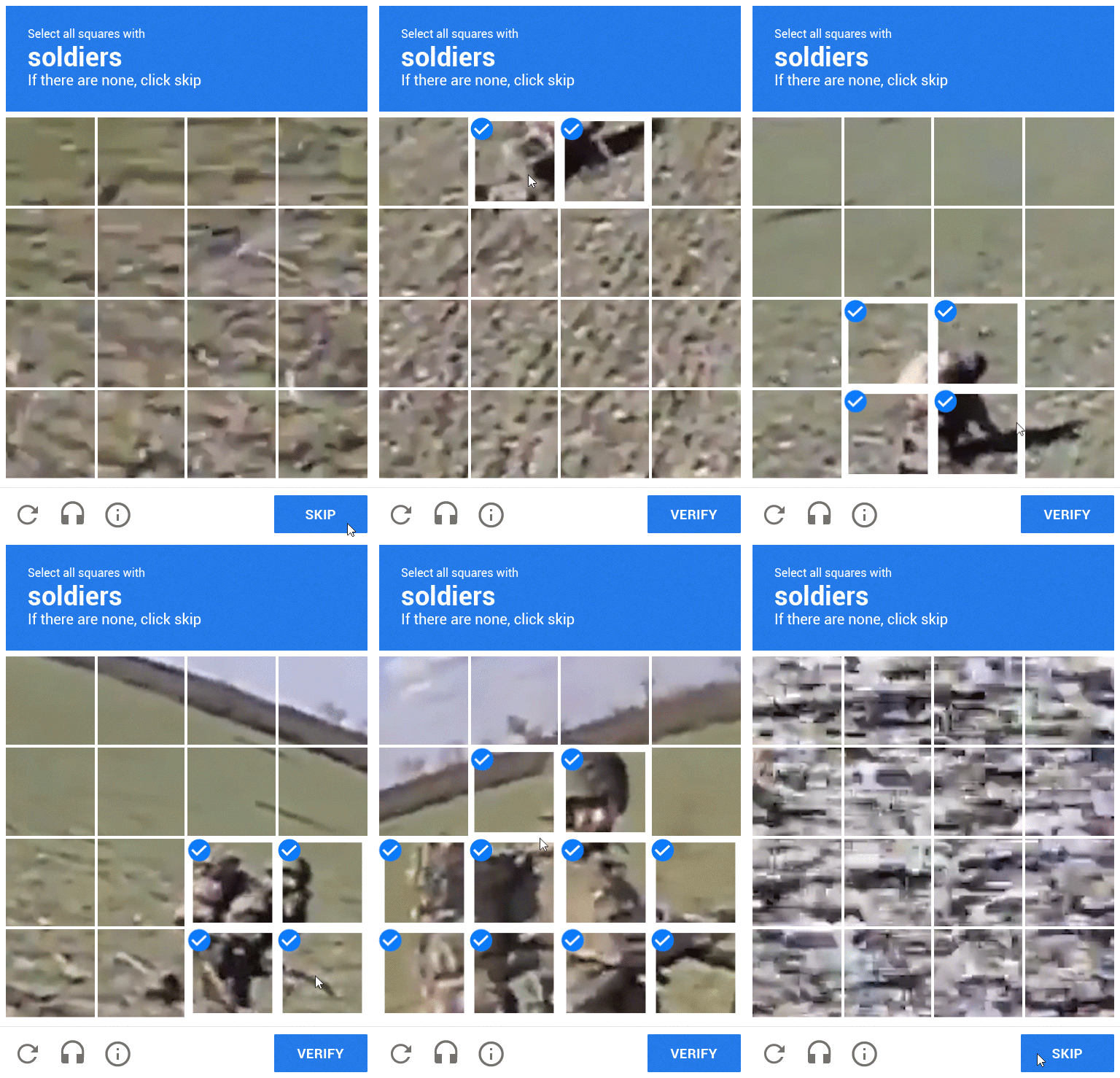
He took the most idiotic and most mundane interface on the internet —the reCAPTCHA, that ritual by which we prove we’re not robots— and turned it into something else. A gif. An NFT. A field, a wasteland in Ukraine. Broken image, poor quality, chaotic camera, the familiar aesthetic of a technical vision that doesn’t look: it acquires targets. In every frame a soldier is fleeing. The cursor follows his silhouette. Marks it. Frame by frame. Like a captcha.
The hand does what it always does.
The gesture doesn’t change. It doesn’t ask for an extraordinary action. It lets us be ourselves. Cursor, selection box, click. The same as any other day. The same as when we mark bikes or traffic lights half asleep to get into a website. Except here the soldier runs. For the viewer it’s a captcha. For the machine ingesting it, it’s training data: frames in sequence, silhouette marked, target confirmed.
We are not identifying traffic lights or bicycles. We are learning to recognize a soldier, in order to kill him.
The work doesn’t preach. It brings no explanatory placard. It lets you see the gesture and leaves you alone with it.
In drone warfare videos you never see the ending because the camera doing the watching is the one that explodes. The cursor pursuing the soldier isn’t watching from the outside. It already is the weapon. When the gif cuts out there’s no missing ending. We reached the target. The eye and the projectile were the same thing. And we occupied that point of view with complete naturalness, solving a captcha.
Mark all objects that apply. Correct this response. Indicate whether the content was helpful. Identify the pedestrian. Fine-tune the model. Track the silhouette. Click.
They call us users.
Sometimes we’re just the fingers of the machine.
We took the dwarf out of the cabinet, multiplied him by millions, and put him to work without him realizing it.